Since August, ChatGPT has shown adverts to people in the UK. This month OpenAI went a step further and published the details of a hotel ad format, currently a closed pilot in the United States.
It is tempting to read this as the moment AI search becomes another paid channel: set a budget, buy your way in. For a luxury hotel, that would be the wrong conclusion. The adverts sit under the answer, they cannot change it, and the guests most likely to book a suite are the least likely to see them.
What has actually changed
According to a Hospitality Net report quoting OpenAI’s own documentation, ChatGPT ads went live in the UK on 11 August 2026 and then rolled out across 31 European countries. Three details matter for hotels.
First, the ads appear below ChatGPT’s response, are labelled as sponsored, and in OpenAI’s words “ads do not influence the answers ChatGPT gives”. The recommendation itself is not for sale.
Second, ads are shown only to people on the Free and Go plans. Nobody paying for Plus, Pro, Business or Enterprise sees them. The frequent traveller who pays for a better assistant, and the executive whose company provides one, are exactly the guests who never see an advert.
Third, the new hotel ad format, as reported by hospitality.today on 13 November, lets the advertiser and the hotel be two different businesses. A booking site in the pilot can list your hotel, show a fixed “from” price it chose itself, and send the click to its own page. It is US-only and invitation-only for now, but the direction is clear.
What guests told one global hotel group
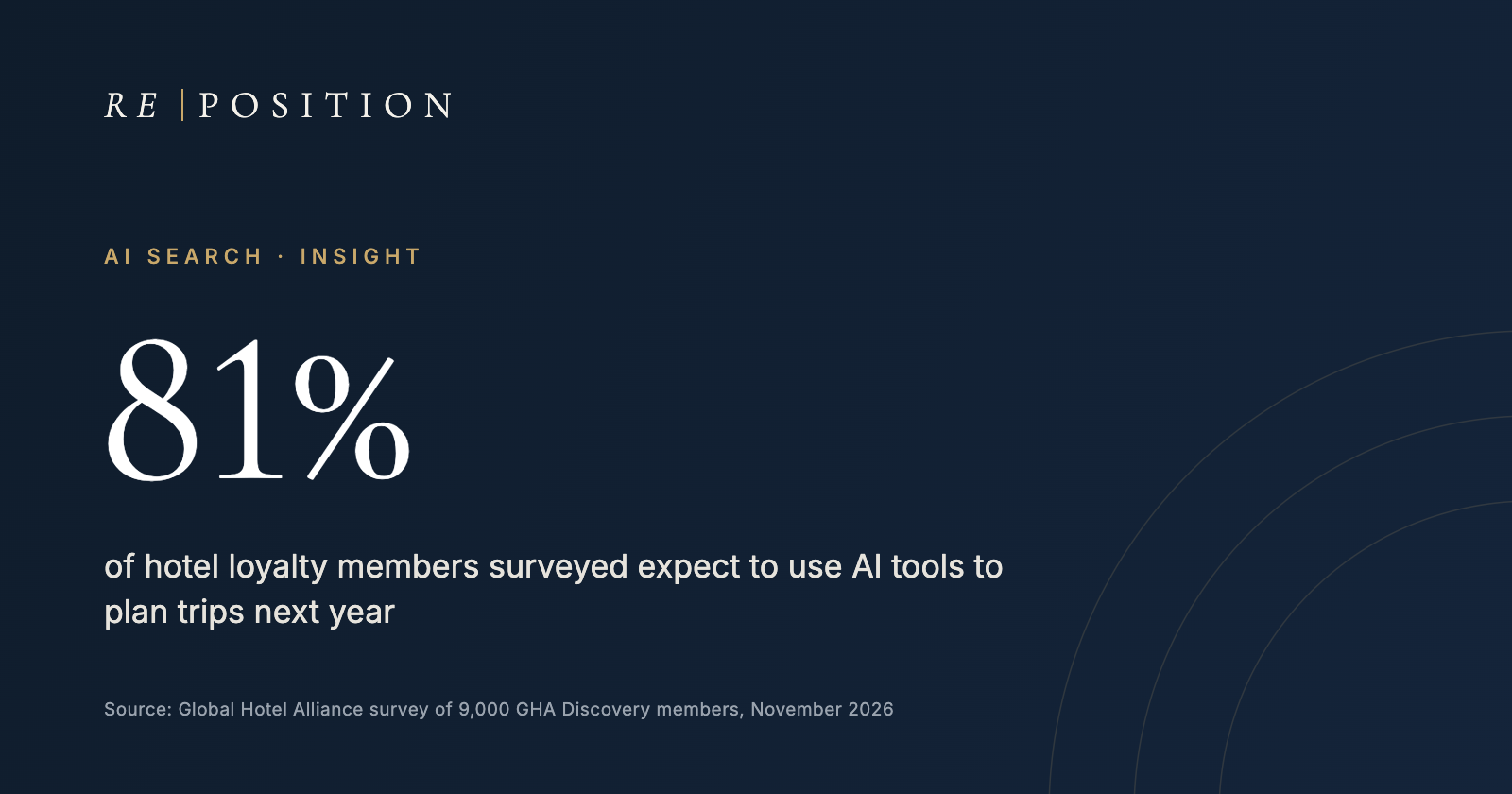
A survey of 9,000 members of the Global Hotel Alliance’s loyalty programme, published this month, shows how far AI has moved into trip planning among people who already spend on hotels.
| What travellers do | Figure | Source |
|---|---|---|
| Expect to use AI tools such as ChatGPT or Gemini for trips next year | 81% | Global Hotel Alliance, via Hotel News Resource, November 2026 |
| Had already used AI to plan a trip (a year earlier) | 62% | Global Hotel Alliance, via Hotel News Resource, November 2026 |
| Trust AI to recommend the right hotel | 37% | Global Hotel Alliance, via Hotel News Resource, November 2026 |
| Would let AI book travel on their behalf | 4% | Global Hotel Alliance, via Hotel News Resource, November 2026 |
| UK respondents willing to pay more for a hotel experience they consider special | 86% | Global Hotel Alliance, via Hotel News Resource, November 2026 |
Read together, these figures describe a guest who asks AI early, checks what it says, and then decides for themselves. Eight in ten expect to use it. Just over a third trust it to pick the right hotel. Almost nobody wants it to book.
Why the unpaid answer still decides it
For a luxury hotel, the guest who matters most is often the one using a paid AI plan, or one provided by their employer. That guest sees only the answer: which hotels ChatGPT names, how it describes them, and which pages it links to.
That answer is built from what AI can find and trust about you: your own website, your Google Business Profile, booking sites, review sites and press coverage. An advert cannot change it. Clear, consistent information can.
The hotel ad format adds a second reason to pay attention. If a booking site can advertise your hotel in ChatGPT with its own price and its own link, the guest needs a strong reason to come to you instead. The best reason is an answer that already describes you accurately and points to your own website.
Four things to check before ads reach hotels in the UK
1. What the answer says today. Ask ChatGPT, Google’s AI Mode and Perplexity the questions your guests ask: the best spa hotel in your area, somewhere quiet for a long weekend, a hotel with a particular facility. Note whether you are named, how you are described, and which site is linked.
2. Whether your facts match. Room types, facilities, opening times and policies should be described the same way on your website, Google Business Profile and the main booking sites. When sources disagree, AI can repeat the wrong version, and guests are left unsure which to believe.
3. Who is advertising your name? Search for your hotel’s name on Google and note which booking sites bid on it. Those are the businesses to watch if ChatGPT’s hotel ads open up beyond the pilot.
4. Where the click lands. Open the page AI links to on your phone. It should confirm what the guest was told and show a clear way to check availability and book directly.
The point
Paid placements in AI assistants will grow, and some hotels will find a use for them. But the recommendation is still earned, not bought, and for luxury hotels it is the part that reaches the guests who matter most. Make sure AI has the right facts about you, and that it sends people to your own website.
See what AI tells guests about your hotel
Our free AI Visibility Snapshot shows how ChatGPT, Google AI Mode and Perplexity describe your hotel, which sites they quote, and which of your pages they send people to. If you would like one, request it on the Reposition website and we will send it over.